What Needs to be Done to "Prep" Diapers?
If you have diapers that are made of synthetic fabrics such as suedecloth, microfiber, fleece, etc there is no actual prepping that is needed for them (this includes most pocket diapers). They are good to go right out of the package. So, for these you can give them a quick wash to get the shipping ickies off them, and you are good to go! However, if you have diapers that have natural fibers such as cotton, hemp or bamboo, these need to be "prepped" in order to strip them of their natural oils. You want to do this prepping on their own, and not with your other diapers to avoid getting the oils on other things.
To prep natural fibers, wash on hot 5-6 times (and dry between each) or boil them (however, do not boil anything with PUL). They will probably be absorbent enough to use after the first few washes, and you can use them before that, but just keep in mind that they will continue to get more and more absorbent the more you wash them. If you are in doubt whether or not they have been prepped enough, take the insert and pour a little water on it. If it absorbs into it, then you are probably good. If it beads up and rolls off at all, more washing may be needed. However, keep in mind that if the liquid does not soak immediately into the fabric this does not necessarily mean that the diaper has not been sufficiently prepped or repelling, as when the diaper is on your baby's bum, the pressure causes the liquid to soak into the fabric.
Where to Store Until Wash Day?


Back “in the day” many people used what is called a “wet pail,” where the diapers sat in a pail of water until wash day. However, it is now known that this actually promotes bacteria growth and is a drowning hazard with small children around. Therefore, it is recommended to use a “dry pail” method. This includes things such as a pail with a liner or a large wet bag. Just toss the diapers in there until you wash them. Some like wet bags that zip, or pails that have an airtight lid. Others feel that an open pail helps to air out the diapers and prevent stink issues.

Personally, we used a tall, plastic white garbage can - purchased from Target - with a Planet Wise pail liner. We also have wet bags for when we are out and about or for day care to use to store the diapers.
How Often to Wash?
Most people aim to wash their diapers every 2-3 days. Some people like to wash every day, especially if they have a smaller stash of diapers. However, it is not recommended to go any longer than 3 days between washing to avoid stink and ammonia build-up, along with mold and other ickies.
What to do with POOP?

My daughter was mostly formula fed as a baby, so her poop was a little thicker than a baby who only ingests breastmilk. Sometimes I sprayed it off, sometimes I didn't - I didn't find this affected our wash routine much at all. Once we started food, though, I was very happy to have a sprayer attached to my toilet. We used the Bumgenius sprayer, and Blueberry Diapers also has the FLO sprayer available. Both easily connect to the tank of your toilet, has an on/off handle and multiple levels of spray strength. Hold the diaper in the bowl, spray it off, and you're done. Into the pail it goes!
What Detergent to Use?
One of my favorite cloth diaper resources is It's the Cloth that Counts blog, from the lovely people over at Abby's Lane, my favorite online diaper (and other fun stuff) retailer. Whenever I need help with my cloth, I usually hit up the blog, although I have been to known to email the owner (Stephanie) and received really great advice.
To start the conversation of which detergent to use, I will point you to two OTHER resources out there, which have charts of a wide variety of detergents, rating how safe they are for cloth diapers.
And now I will give you my recommendation.
I use Tide Original Powder.
One of my favorite cloth diaper resources is It's the Cloth that Counts blog, from the lovely people over at Abby's Lane, my favorite online diaper (and other fun stuff) retailer. Whenever I need help with my cloth, I usually hit up the blog, although I have been to known to email the owner (Stephanie) and received really great advice.
To start the conversation of which detergent to use, I will point you to two OTHER resources out there, which have charts of a wide variety of detergents, rating how safe they are for cloth diapers.
And now I will give you my recommendation.
I use Tide Original Powder.
If you read through those charts, you will see that Tide is NOT recommended for cloth. Except it is. If you check out this post from ITCTC, a number of commercial cloth diaper manufacturer's actually recommend Tide.
My personal experience is this. I used to use Rocking Green, which is rated highly for being cloth diaper safe. I was never able to get my diapers truly clean with RnG - out of the dryer, they'd smell, which you never want to have happen. So I switched to Tide powder and I've been a happy camper since. I have never had smell issues, I've never had any issues with repelling (one of the big concerns out there for certain detergents), and I used Tide for nearly three years my first go around with cloth.
Sometimes the issue of detergent is not just an issue of the detergent, but also an issue of what kind of water you have. Hard water, soft water, this all impacts your wash routine, so you might have to play with your routine to figure it all out.
What Wash Routine?
This is definitely something that is a personal preference, and depends largely on your washing machine, type of water (normal, hard, soft) and what detergent you are using. Another thing to note is that many diaper brands and stores will send you wash information specific to the diaper, so always default to that first.
As a general rule of thumb, this is what most people's wash routine looks like...
- Throw diapers into the washer
- Turn the pail liner or wet bag inside out (helps so that it doesn't fill up with water and unbalance the washer) and throw it in as well
- Warm rinse, pre-wash or light cycle
- Hot wash - I use a full scoop of Tide - don't skimp on the soap, as your diapers might not get fully clean. Using too much soap CAN lead to build up issues, but if you do an extra rinse and don't have lots of bubbles in the end, you're probably fine. I usually go somewhere between the 2-3 line on my Tide scoop and it has served me well.
- Extra warm or cold rinse
How to Dry Them?
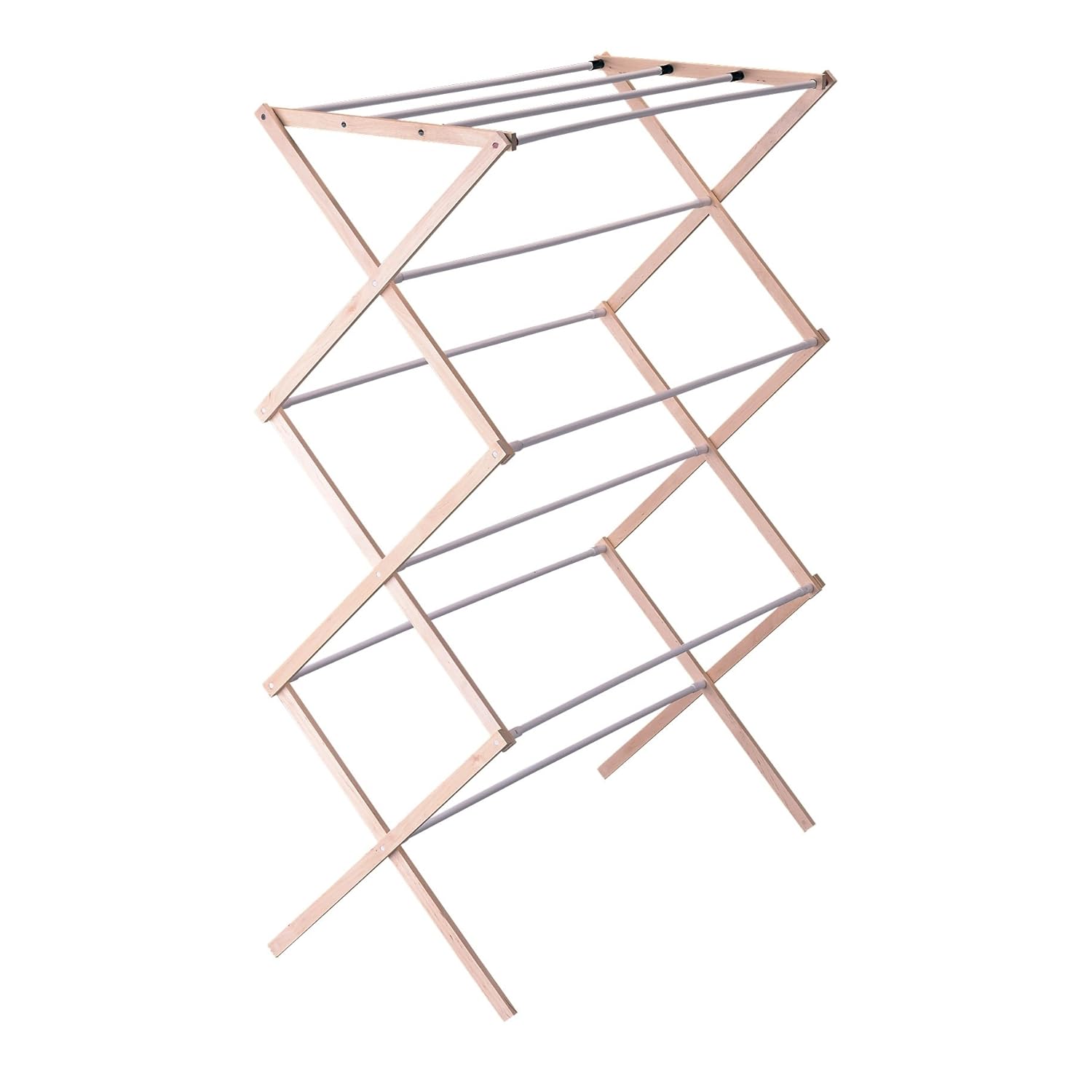 This is also somewhat of a personal thing and will depend on the type of diapers that you have. In general pre-folds, fitteds and inserts can all be thrown in the dryer and tumble dried. Other things with PUL (waterproof material) or aplix/velcro such as covers and shells tend to be a little more finicky. In order to extend their life, line drying is preferred. However, it will not hurt them to be tumble dried on low, especially in a pinch. It should be noted that many people don't like the "crunch" that the diapers get with line drying and tumble all of their diapers on low with no issues at all.
I go back and forth on drying in the dryer - I usually default to the dryer because I'm lazy. When I'm being good, though, I have a standing drying rack on which I dry my pocket shells or any covers.
What About Stains?
SUN! The sun is your best weapon when it comes to dealing with stains in your diapers. When wet put your diapers out on a line to dry in the sun or set them on a sunny windowsill. As long as they smell clean, they most likely are clean and the stains are just cosmetic. However, if the stains still bother you some people have had some luck with stain products such as Bac-Out. Just make sure that you rinse really well so that the enzymes in these sprays don’t irritate your little one’s tush!
Is that All?
As you can see there are some general "rules" for the care of your cloth diapers, but just like anything else with cloth diapers (finding a good fit, stalking WAHMs) it is an art and not an exact science. If you have particular diapers that you are wondering about or are having trouble with, make sure to look at the instructions for that particular diaper brand. They may be helpful, and will at least keep you from doing something that they strictly do not recommend!
In general don't let it overwhelm you. It may be a lot of trial and error in the beginning, but it really is easy once you have your own personal routine nailed down.


